



Before AI ‘Destroys’ the world, it’ll save you from cancer and other maladies, finds Satyen K. Bordoloi
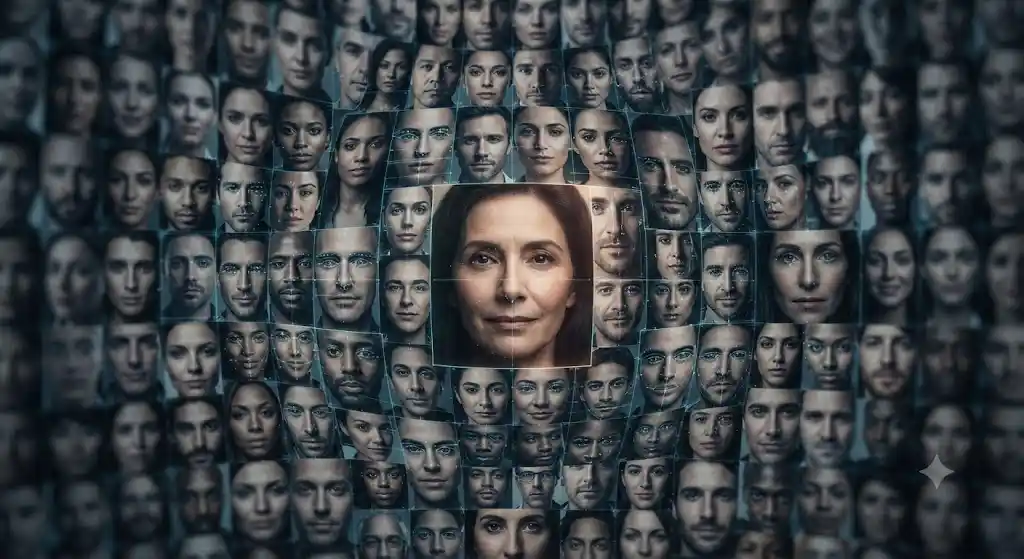
During the worst days of the pandemic, multiple studies emerged that claimed that trained on enough chest X-rays of COVID-19 patients, AI tools could predict it in new patients with an accuracy that at times surpassed humans. Back then, when hospitals were overwhelmed and radiologists drowning in X-rays, this felt like godsent magic. Today, medical AI has come so far that, with just a photograph of a face, it can now predict cancer survival.
THE STUDY
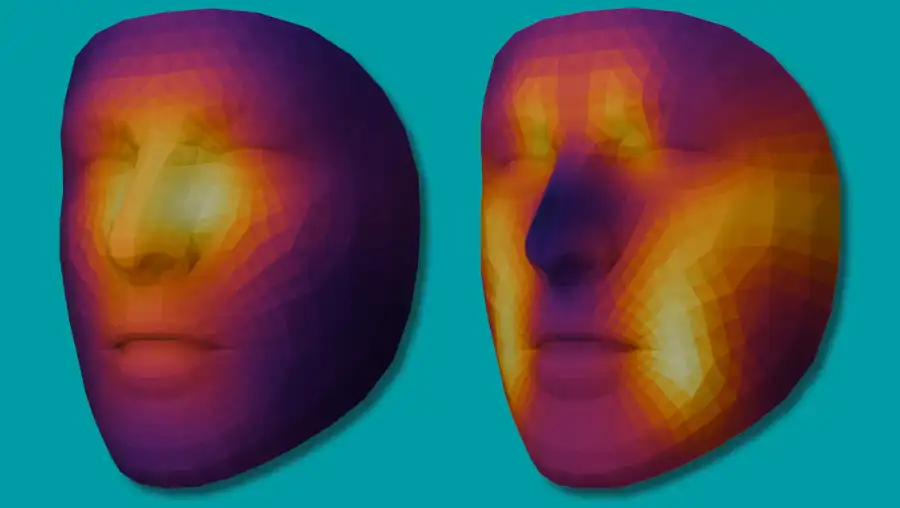
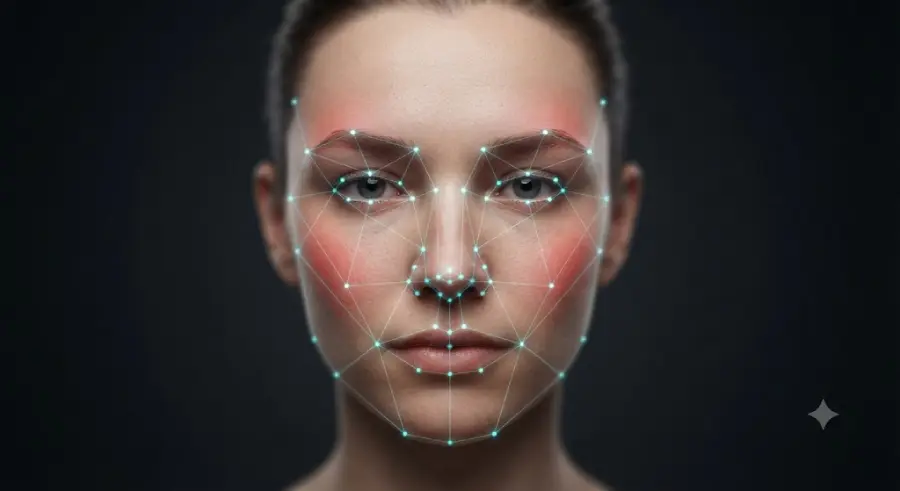
In October 2026, researchers at Mass General Brigham published a study in The Lancet Digital Health describing an AI foundation model called FAHR-Face, i.e. Foundation Artificial Intelligence for Health Recognition, trained on over 40 million facial photographs, that could do two things. One, called FAHR-FaceAge, could estimate a person’s biological age by analysing the nasolabial folds, the forehead above the orbits, and the temples. The second, FAHR-FaceSurvival, looked elsewhere, i.e. beneath the eyes and around the bridge of the nose, to predict, from just one photograph, the likelihood of survival in patients undergoing cancer treatment.
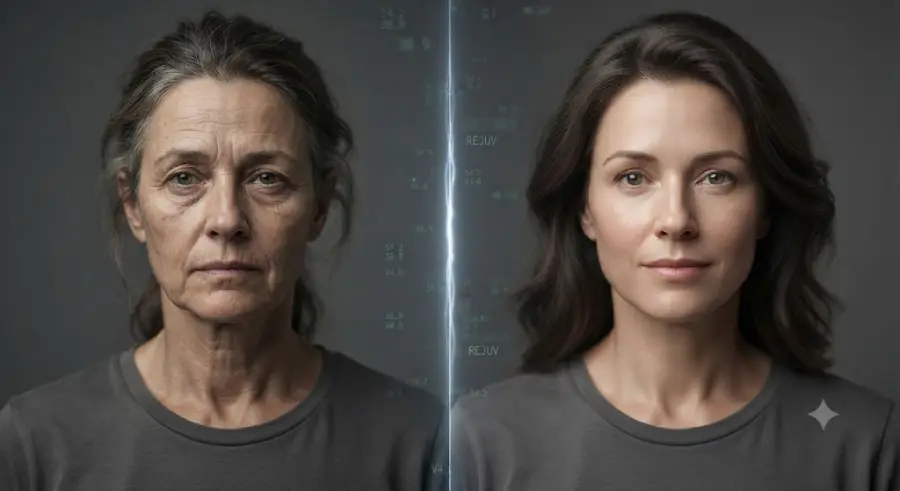
The findings were fascinating. In cancer patients treated with radiotherapy, those that FAHR-FaceAge said looked five or more years older than their chronological age had a 21 per cent higher risk of dying during an average four-year follow-up. But those that looked five years younger had a 17 per cent lower risk.
What the survival model showed was even more dramatic. Among the highest-risk group identified by FAHR-FaceSurvival, over half died within 90 days of the photo being taken, compared with two per cent in the lowest-risk group.
AI IN DIAGNOSTICS
For those busy with AI doomerism, this is news. For those of us covering it, this was expected because computer vision has been quietly revolutionising diagnostics across many medical disciplines by treating images as a dense data field it could decode and find disease patterns. Take dermatology, where deep learning models matched board-certified dermatologists in classifying skin cancer from dermoscopic images with an AUC (Area Under the Curve) of 0.96 across eighteen cancer types, an exceptionally high number.
In pathology, foundation models trained on over a million whole-slide images now achieve clinical-grade results in grading rare and common cancers, with AUROC values above 0.9. The same is the case with low-dose CT lung cancer screening, which has been transformed by 3D convolutional networks that outperform radiologists in predicting nodule malignancy, reaching an AUC of 0.94. Likewise, breast cancer risk models built on mammograms have surpassed traditional risk calculators, with AUCs going from the low 0.60s to 0.77. The result is consistent: give the AI model a sufficiently deep network and enough labelled images, and it will discover patterns in morphological signatures that human clinicians – restrained as they are by time, fatigue, and conscious perception – cannot reliably see.
THE GENIUS OF THE STUDY
The FAHR-Face work extends this logic into an entirely new territory. A chest X-ray or a biopsy slide is but a medical object, produced within medical instruments and interpreted inside a diagnostic tradition. But a general image of a face is the most public, personal, and socially saturated surface each one of us possesses. Yet this research states that it carries enough record of biological wear for a machine learning algorithm to track health trajectories over time.
The models seem to work despite pose, makeup and even plastic surgery, which means that what the system is reading isn’t skin-deep. What we do leaves its mark on our faces. Take smokers – they look biologically older than those who’ve quit, who, on their part, look older than those who have never smoked. Heavy alcohol and drug use also accelerate facial ageing. The face, turns out, may not have been a map to our soul, but it told a tale of our health. We just had to find the tool to read it.
And it’s also not too radical. Because if you look at it, oncologists often looked at the faces of their patients to make intuitive judgments about whether a patient looked frail enough to withstand aggressive radiotherapy or surgery. Its developers insist that what FAHR-Face does is simply to make that intuition quantitative, consistent, and scalable, not as a replacement for clinical judgment, but as its support. This can mean the difference between life and death in resource-poor settings.
The FaceAge research study has begun inviting members of the public to upload photographs and receive a research readout, building a larger and more diverse dataset.
THE PROBLEM WITH FACE DIAGNOSIS
No matter how good this sounds, it is not without its share of problems. If a face can be converted into a score of your mortality, where could all this lead? The selfie that an insurance company demands might become one used to either underwrite a policy or reject a claim, making the face an instrument of financial discrimination. Then there’s the spectre of employment screening where a hiring algorithm may estimate the biological age or health risk to filter out candidates it deems expensive or fragile.
And let’s not forget that foundation models trained on millions of faces will inherit the skews that those datasets contain. The FAHR-Face researchers were particular to generalise the data across age, sex, race and cancer subgroups but that need not be so in every other medical AI model developed. Because a score miscalibrated for one demographic group could lead to extra treatment for some and abandonment for others. And also, since such models only predict statistical associations, not a biological certainty, a high-risk score is not a diagnosis but a probability that could easily be misread by clinicians, patients or family as a verdict.
This was a test study. What this means is that this technology is here to stay. And that it will only become more powerful with more training. This also means that the pressure to find clinical value from such cheap, all-available data will only increase. And there is no guarantee that the governance of such a tech will keep pace with growth.
The researchers here have their intention correct. They want “to make face photograph-based health assessment more quantitative, consistent and scalable so it can support personalized treatment,” as Raymond Mak, one of the researchers and a radiation oncologist at Mass General Brigham, said. But research intention is not the same as the final intention of the market, and it could easily slip into its dystopian version where a hospital can deny a patient affordable coverage based merely on the image of his face, all because the human face is now a dataset for an AI system.
As ever with AI, the tech is going fast. Our ethics have to figure out a way to keep pace.
In case you missed:
- The Machine That Cried Wolf: Why AI “Pain” Is Not Suffering
- 2025 – Year of Gene Therapy: Curing Lymphoma & Wiskott-Aldrich Syndrome, & Using AI
- A man almost cured his dog’s cancer with AI: Could you do the same for your loved ones?
- The Default Bias: Why Women’s Underrepresentation in AI is Turning the World Crooked
- The Weight of the World: Why the Open vs. Closed AI War Is Really About Who Controls the Future
- Reviving Old Research With AI: How It Can Transform The World
- Don’t Mind Your Language with AI: LLMs work best when mistreated?
- Use AI or Get Fired: The New Workplace Ultimatum Hanging Over Every Job
- No, AI Didn’t Unleash a Virus on the World: It Might Have Done Something Far More Terrifying – Save It
- The Cheating Machine: How AI’s “Reward Hacking” Spirals into Sabotage and Deceit